by Michelle Palafox*
Few real estate agents specialize in land and terrain expertise. As both a real estate broker and builder, with decades of experience, allow me to bring you a caveat to the oft quoted phrase we find on the multiple listing service by intelligent, well meaning, experienced listing agents who simply haven’t made it part of their career to foresee, direct, observe, and negotiate building projects. Agents who hold the title of Land Specialist also often have very little actual understanding of how to analyze the complexities of land in a way that is beneficial to their buyers. In the real estate world, it is enough to know the differences of verbiage and contracts that separate traditional housing from land purchases, but rarely are agents also trained in the complexities of how land behaves or the differences between one type of terrain and another. It is my hope that before you make an investment into a parcel of land, you understand the possible dangers to trusting the myth that flat land means easy, or worse, inexpensive build.
As a terrain expert, I can tell you that yes, there are times that flat land can equate an easier excavation job, however there are many circumstances in which flat land can become more problematic than rolling hills or other types of hybrid topography. Several factors play a tremendous role in site preparation and building pad creation, such as sand type, the presence of certain elements in the dirt or the type of rock within the building area. In Southern Arizona, a flat parcel can include things like caliche, clay, granite, or be situated in floodplain or adjacent to riparian zones, each of which has its own necessary requirements for moving forward and each of which will add complexity and unexpected cost to the finished product.
Placement also plays a major role in the difficulty of excavation, even with a perfectly flat building envelope. Consider the charming listing description that a property has a flat building area, nestled between fantastic rock outcroppings, that allow a more secluded and private feel. I once designed a project for just such a luxury listing, and the design became more complex than my wonderful client expected, because even though the space was flat, and indeed did afford sublime views coupled with the privacy of picturesque rock outcroppings, it was nestled into the rock so perfectly that the ground itself had a thin layer of dirt on top of a hidden slab of almost impenetrable granite. This would raise costs not only in breaking rock to build the house but the larger issue came in designing a path for water to escape from the home area – water tends to pool in granite rather than absorb into the ground, so this particular parcel would have required not only extra costs in rock breaking but also added investment in civil engineering to design a path for rainwater to flow away from the alcove and avoid flooding the home.
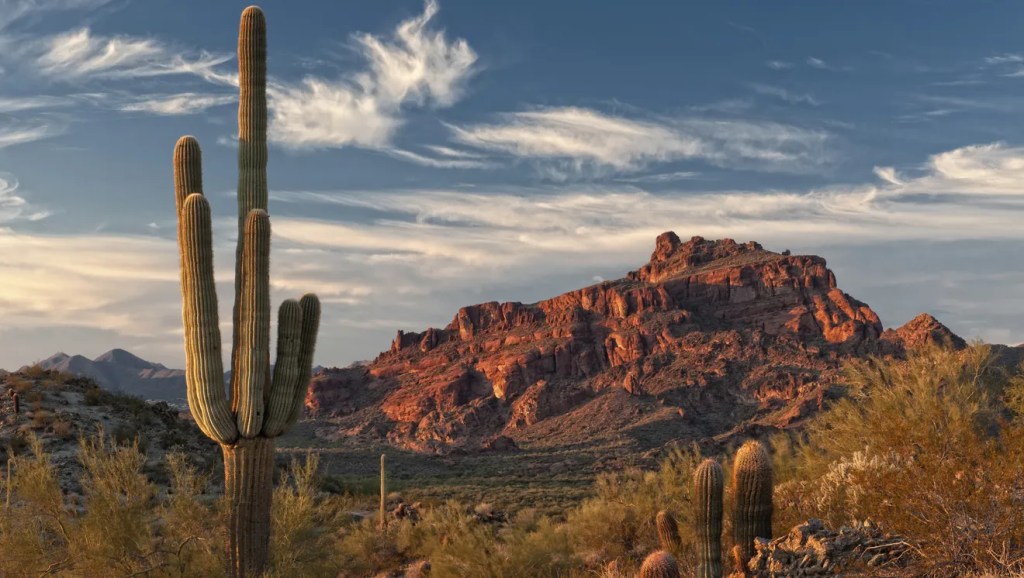
Consider also another possible situation. You find a lovely hilltop overlooking a spectacular view. The hill is soft soil, which would certainly negate any need for removing problematic rock, and the hilltop proves flat – certainly an easy build. Or perhaps not. Perhaps, and I have seen this before, the sand is soft, the hill is steep, and in order to safely place a structure on the top, we have to brace the sides of the hill with rock work. Such a project is very possible to accomplish, and the rock or retaining walls around the structure can become a beautiful feature once the house is complete, but it will require engineering, special inspections, and the cost of rock, concrete and specialized labor to put in place, all of which may come as unpleasant financial surprises.
Or perhaps we have a lovely flat parcel with a great deal of acreage in soft terrain with no hills, rock, mountain or active streams nearby. In Southern Arizona, let us do our due diligence to determine whether or not this perfect parcel is in flood plain. It is very possible to build a home in floodplain, but it will require added engineering, often requiring adding rock and a specialized building pad to safeguard from monsoon damage.
And the list goes on, but don’t be discouraged – there is a way to safeguard your investment and avoid unforeseen costs later in building. Prior to purchasing a vacant parcel, and even better if prior to placing an offer on a parcel, have a terrain expert analyze the area. Many builders can do so and are willing to give an assessment for very little, which can ensure you have all pertinent information before purchasing land. Your investments are important – going the extra mile with an analysis before purchase will help to safeguard your new asset and give you a stronger understanding of how best to manage your property portfolio addition.
*Michelle Palafox is the Owner and General Contractor of Macoyosh Builders, Owner and Real Estate Designated Broker for Corshelle Realty, and Owner of Macoyosh Drafting and Design


Leave a comment